
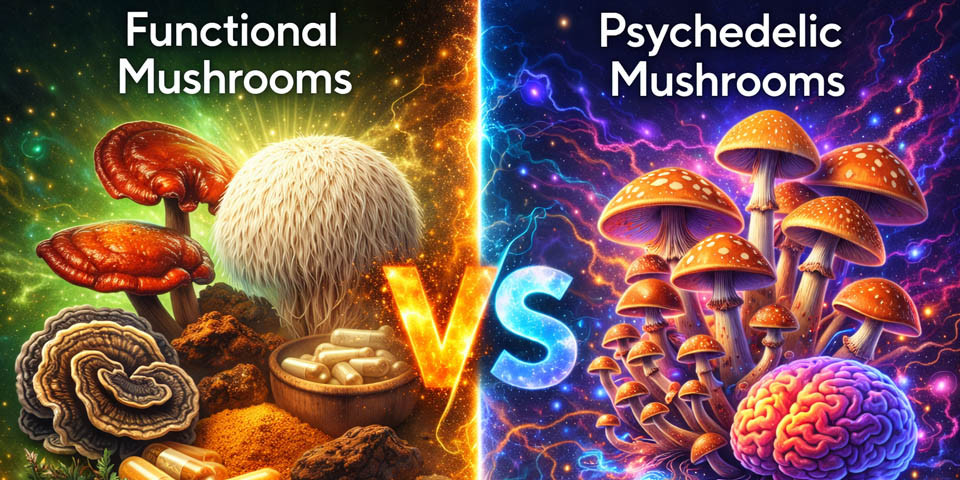
Functional Mushrooms vs Psychedelic Mushrooms: What’s the Difference?
Mushrooms are gaining massive attention in the wellness world, but many people are confused about the difference between functional mushrooms and psychedelic mushrooms. While both come from the same fungal kingdom, they serve completely different purposes. Functional mushrooms like Lion’s Mane, Reishi, and Cordyceps are commonly used for wellness routines, focus, and immune support, while psychedelic mushrooms contain compounds such as psilocybin that can alter perception and consciousness.
In this guide, we’ll clearly explain the differences, effects, benefits, and common misconceptions so you can understand exactly what sets these two types of mushrooms apart.
Mushrooms are having a moment — and honestly, it’s easy to see why. One side of the internet is obsessed with mushroom coffee, Lion’s Mane, and “functional” blends for focus and wellness. The other side is talking about psilocybin, microdosing, and the mental health research around psychedelic mushrooms.
But here’s the key: functional mushrooms and psychedelic mushrooms are not the same thing. They can look similar on a label or in a headline, yet they’re used for completely different purposes and have very different effects. This guide breaks it down clearly — no hype, no confusion — just an easy, thorough explanation you can trust.
1) Clear definitions (no confusion)
When people say “mushrooms,” they could mean a lot of things — culinary mushrooms, supplements, extracts, teas, or psychedelic species. In everyday conversation, this topic usually comes down to two buckets:
Functional mushrooms (aka medicinal mushrooms)
Functional mushrooms are mushroom species used for wellness support. They’re typically consumed as capsules, powders, tinctures, teas, or blended into products like mushroom coffee. The important part: they are not psychedelic and do not get you high.
Psychedelic mushrooms (aka magic mushrooms)
Psychedelic mushrooms are mushroom species that contain psychoactive compounds like psilocybin (and its active form psilocin). These compounds can cause hallucinations, intense shifts in perception, and significant changes in mood, cognition, and sensory experience.
If you’ve ever asked Google something like “are functional mushrooms psychedelic?” or “do functional mushrooms get you high?” — you’re not alone. A lot of people confuse them because they share the same word: “mushrooms.” But functionally (no pun intended), they’re totally different categories.
2) What are functional mushrooms?
Functional mushrooms are commonly used in wellness routines because they contain compounds people associate with immune support, stress resilience, energy, and cognitive support. You’ll often see them described as “adaptogenic” or “nootropic-friendly” — and you’ll also see them paired with everyday habits like coffee or smoothies.
The best way to think about functional mushrooms is like this: they’re a supplement category — not a “trip” category.
Common functional mushrooms (most searched + most used)
- Lion’s Mane (Hericium erinaceus) — commonly used for focus, memory support, and brain health routines.
- Reishi (Ganoderma lucidum) — often associated with relaxation, stress support, and nighttime routines.
- Cordyceps — popular in “energy / performance” stacks, often used pre-workout or in the morning.
- Chaga — valued for antioxidant content and overall wellness support.
- Turkey Tail — commonly discussed for immune and gut-support routines.
How functional mushroom products are made
Functional mushroom supplements are typically sold as:
- Powders (mixed into coffee, tea, smoothies)
- Capsules (simple daily routine approach)
- Tinctures (liquid extracts)
- Gummies (popular, but quality can vary widely)
You’ll also see terms like fruiting body, mycelium, and extract. Those aren’t just buzzwords — they can affect potency and quality depending on the brand and manufacturing method. We’ll cover what to watch for in the safety/quality section.
3) What are psychedelic mushrooms?
Psychedelic mushrooms (often called magic mushrooms) contain compounds that can produce an altered state of consciousness. The best-known compound is psilocybin, which the body converts into psilocin. Psilocin interacts with serotonin receptors in the brain — and that’s where the “psychedelic effects” come from.
Common species people reference
- Psilocybe cubensis — one of the most commonly discussed species.
- Psilocybe semilanceata (“Liberty Caps”) — commonly referenced in conversations around potency.
- Psilocybe azurescens — often described as very potent.
The conversation around psychedelics has grown because of: scientific research interest, cultural shifts, and evolving policy debates in certain places. People also search this topic heavily because they’re looking for clarity: what it is, what it does, what’s safe, and what’s legal where they live.
4) Functional vs psychedelic: the real differences
The most direct difference comes down to this: functional mushrooms are non-psychoactive, while psychedelic mushrooms are psychoactive.
| Feature | Functional Mushrooms | Psychedelic Mushrooms |
|---|---|---|
| Primary purpose | Wellness support (daily routine) | Altered consciousness / psychedelic experience |
| Psychoactive? | No | Yes (psilocybin/psilocin) |
| “Do you get high?” | No | Yes (can be intense) |
| Common products | Supplements, teas, coffee blends | Varies widely; often regulated/illegal depending on location |
| Examples | Lion’s Mane, Reishi, Cordyceps, Turkey Tail | Psilocybe cubensis (and other psilocybin species) |
5) Effects: what you’ll feel (and what you won’t)
Functional mushroom “effects” (subtle and routine-based)
Functional mushrooms aren’t typically something you “feel” like caffeine or a stimulant — at least not instantly. Most people use them as part of a routine and look for gradual changes over time.
Psychedelic mushroom effects (noticeable + perception changing)
Psychedelic mushrooms can cause dramatic shifts in:
- Visual perception (patterns, color changes, distortions)
- Sense of time (minutes can feel like hours)
- Mood and emotional intensity
- Self-reflection and introspection
- Sensory sensitivity (sound, touch, lights)
6) Benefits people look for (wellness vs altered states)
Functional mushroom benefits (common consumer goals)
- Focus + productivity routines (often with Lion’s Mane)
- Stress resilience and calming routines (often with Reishi)
- Energy and endurance support (often with Cordyceps)
- Immune support routines (commonly Chaga / Turkey Tail)
- Wellness stacking (combining mushrooms with vitamins, adaptogens, or lifestyle habits)
Psychedelic mushroom “benefits” (why people research psilocybin)
Many people search psilocybin because of the growing public conversation around mental health research and therapy models. People also explore it for spiritual curiosity, introspective experiences, and personal meaning-making.
7) Safety, quality, and “label traps”
Functional mushroom quality checklist
- Clear species label (e.g., “Hericium erinaceus” for Lion’s Mane).
- Fruiting body vs mycelium clearly stated (transparency matters).
- Extract ratio or standardization (shows the product has been processed intentionally).
- Third-party testing (heavy metals, contaminants, identity testing).
- Realistic claims (avoid “cures everything” marketing).
Avoiding confusing “mushroom gummy” marketing
Some products use vague language like “proprietary mushroom blend” without naming species or testing. If a label won’t tell you what’s inside: don’t buy mystery mushrooms.
8) Legality basics (general guidance)
In most places, functional mushrooms are legal and sold as supplements or food products. Psychedelic mushrooms are often illegal or heavily restricted depending on where you live.
Because laws change and vary by location, treat this as general education — not legal advice.
9) How to choose the right one for your goal
If your goal is daily wellness
- Focus / learning / productivity → Lion’s Mane
- Relaxation / stress support → Reishi
- Energy / performance support → Cordyceps
- General wellness / immune routine → Turkey Tail or Chaga
If your goal is “psychedelic effects”
Psychedelic mushrooms are a different category entirely. Approach it as a serious topic: laws, safety, mental health considerations, and evidence-based guidance matter a lot here.
10) FAQ (featured-snippet ready)
Are functional mushrooms psychedelic?
No. Functional mushrooms are non-psychoactive and do not contain psilocybin.
Do functional mushrooms get you high?
No. Functional mushrooms are used for wellness and do not produce a psychedelic high.
What’s the main difference between medicinal mushrooms and magic mushrooms?
Medicinal mushrooms are used for health support and are not mind-altering. Magic mushrooms contain psilocybin/psilocin.
Is psilocybin the same as Lion’s Mane?
No. Psilocybin is psychoactive. Lion’s Mane is a non-psychoactive functional mushroom.
Can mushroom supplements make you hallucinate?
No. Typical wellness supplements should not cause hallucinations because they use non-psychedelic species.
Want a clean, legit functional mushroom routine?
If you’re shopping for functional mushrooms, the goal is simple: quality, transparency, and a product that fits your daily life.
Disclaimer: This content is for informational purposes only and is not medical advice. Always consult a qualified professional for health or legal questions.
**The beliefs and opinions expressed in this blog are not those of Waterbeds 'n' Stuff.
Shop Our Online Headshop For Mushrooms and tons more!
Want more cannabis education, news, and product tips?
Subscribe to our newsletter or follow us on social media.
Facebook
Instagram
Twitter X
Pinterest
Explore More:
- Shop All Glass Bongs
- Beaker Bongs
- Delta, THC & CBD
- Percolator Bongs
- Shop Papers
- Shop Electronic Smoking Devices
- Read Blogs
- Wholesale Registration
Recent Posts
-
Top 7 Functional Mushrooms and Their Benefits: Lion’s Mane, Reishi, Cordyceps and More
Functional Mushrooms Have Become Mainstream Functional mushrooms have rapidly become one of the fas …Mar 04, 2026 -
Functional Mushrooms vs Psychedelic Mushrooms: What’s the Difference?
Mushrooms are gaining massive attention in the wellness world, but many people are confused about th …Mar 04, 2026 -

Ohio SB 56: Why We’re Fighting Back - And Why We Need You to Join Us
Ohio voters made their voices clear in 2023 when they approved Issue 2 and chose a future where hemp …Feb 26, 2026